
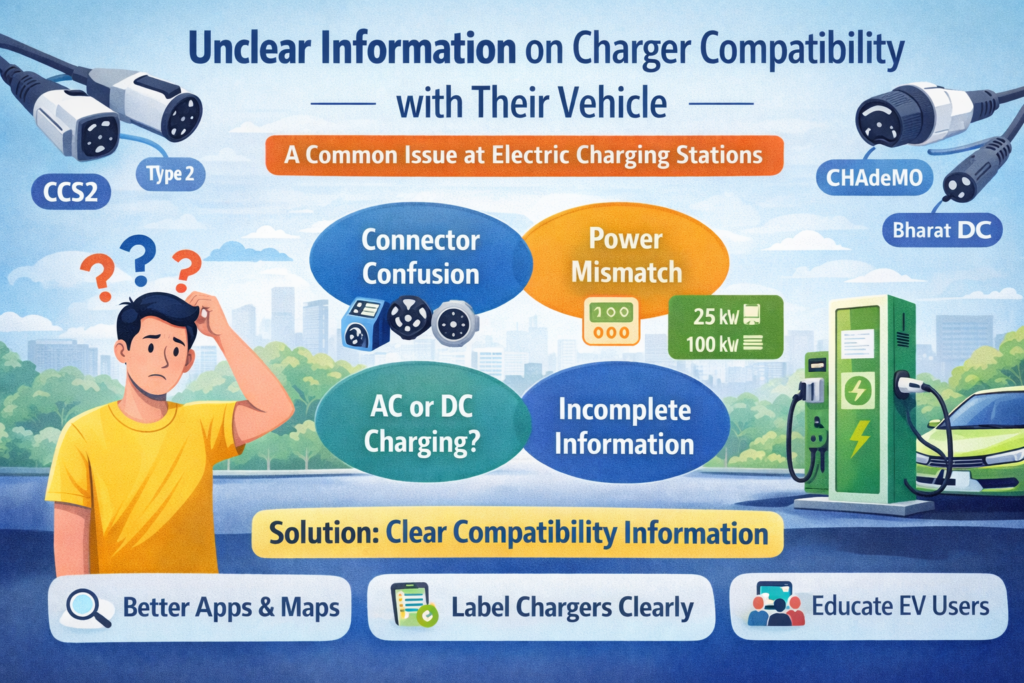
In the rapidly evolving world of electric vehicles (EVs), Smart EV Charging Solutions are revolutionizing how we power our rides. Yet, one persistent headache for EV owners remains: unclear information on charger compatibility with their vehicle. Imagine pulling up to an electric charging station, only to discover your cable doesn’t fit or the voltage is mismatched—frustrating, right? This blog dives deep into this issue, offering practical advice, expert insights, and innovative fixes to ensure seamless charging experiences. Whether you’re a new EV adopter or a seasoned driver, these Smart EV Charging Solutions will empower you to navigate the charging landscape with confidence.
We’ll explore the root causes of compatibility woes, spotlight how Smart EV Charging Solutions integrate with electric charging stations, and provide actionable steps to future-proof your setup. By the end, you’ll have the tools to charge smarter, not harder. Let’s charge ahead!
Understanding the Charger Compatibility Conundrum
Why Charger Compatibility Feels Like a Puzzle
EV ownership promises eco-friendly freedom, but the reality often hits at the nearest electric charging station. Unclear information on charger compatibility stems from a fragmented ecosystem. Manufacturers like Tesla, Nissan, and Ford use varying standards—think CCS (Combined Charging System) versus CHAdeMO or Type 2 connectors. A 2023 survey by the Electric Vehicle Association revealed that 62% of drivers faced at least one compatibility snag in their first year, leading to wasted time and range anxiety.
This confusion isn’t just technical jargon; it’s a barrier to adoption. Without clear guidelines, drivers second-guess every plug-in, especially at public electric charging stations where options abound but specs are buried in fine print. Smart EV Charging Solutions address this by leveraging app-based diagnostics that scan your vehicle’s onboard system before you even arrive.
The Role of Electric Charging Stations in the Mix
Public and home electric charging stations are the lifeblood of EV travel, but their dhttps://zapev.site/services/iversity amplifies compatibility issues. Level 1 stations (120V outlets) work universally but charge glacially slow—up to 8 hours for a full boost. Level 2 (240V) and DC fast chargers demand specific adapters, and not all vehicles play nice. For instance, a Rivian R1T might thrive at Electrify America electric charging stations, while a Chevy Bolt needs a J1772 adapter for the same spot.
Enter Smart EV Charging Solutions: These systems use AI-driven platforms to map nearby electric charging stations and verify real-time compatibility. Apps like PlugShare or ChargePoint integrate vehicle profiles, alerting you to mismatches before you commit. This proactive approach turns potential pitfalls into smooth pit stops, saving hours and reducing stress.
Decoding Charger Types: A Beginner’s Guide
Breaking Down Connector Standards
To demystify charger compatibility, start with the basics. The SAE J1772 is the North American standard for AC charging, fitting most non-Tesla EVs. Tesla’s proprietary NACS is gaining traction, with Ford and GM adopting it by 2025. In Europe, Type 2 dominates, while Japan’s CHAdeMO lingers for older Nissans.
Unclear labeling at electric charging stations exacerbates this—icons without context leave drivers guessing. Smart EV Charging Solutions simplify with universal adapters and smart hubs that auto-detect and switch protocols. For example, the Lectron Vortex plug supports multiple standards, ensuring your EV sips power from any electric charging station without drama.
Voltage and Amperage: The Hidden Heroes
Beyond connectors, voltage (AC vs. DC) and amperage matter. Home setups often cap at 32 amps, but public DC fast electric charging stations push 350 kW for 80% charges in 30 minutes. Mismatches can trigger errors or slow your session to a crawl.
Smart EV Charging Solutions shine here, with load-balancing tech that optimizes power draw based on your vehicle’s limits. Tools like Emporia Energy’s app monitor usage, preventing overloads and extending battery life. Pro tip: Always check your owner’s manual for max specs—it’s your first line of defense against compatibility chaos.
How Smart EV Charging Solutions Solve Compatibility Woes
The Tech Behind Seamless Integration
Smart EV Charging Solutions aren’t just buzzwords; they’re engineered ecosystems blending IoT, AI, and cloud computing. At their core, these solutions use vehicle-to-grid (V2G) communication via OCPP (Open Charge Point Protocol) to handshake with electric charging stations. This means your EV “talks” to the charger, negotiating the best fit automatically.
Take Wallbox’s Pulsar Plus: It pairs with apps that profile your vehicle, suggesting optimal electric charging stations en route. No more squinting at faded signs—get push notifications on compatibility, pricing, and availability. For fleet operators, JuiceBox’s enterprise suite scales this, ensuring every van or truck plugs in without hiccups.
Real-World Wins: Case Studies from the Road
Consider Sarah, a commuter in Seattle. Frustrated by inconsistent electric charging stations at her office garage, she adopted Smart EV Charging Solutions from ChargePoint. The app’s compatibility checker flagged a faulty Level 2 unit, rerouting her to a nearby alternative—saving 45 minutes daily.
In urban hubs like Los Angeles, where electric charging stations cluster densely, Smart EV Charging Solutions like EV Connect’s platform use geofencing to reserve spots matching your plug type. A 2024 Plug-In America report noted a 40% drop in failed sessions among users of such tech, proving its tangible impact.
Building Your Compatible Charging Arsenal
Home Setup Essentials
Your garage is ground zero for reliable charging. Start with a certified Level 2 charger from brands like JuiceBox or Grizzl-E, both emphasizing broad compatibility. Install via a licensed electrician to match your panel’s capacity—most homes handle 40-50 amps post-upgrade.
Incorporate Smart EV Charging Solutions with Wi-Fi-enabled units that schedule off-peak charging, dodging high tariffs. Pair with solar integration for green bonuses, and always verify against your EV’s specs. Resources like the U.S. Department of Energy’s Alternative Fuels Data Center offer free compatibility tools—link out for deeper dives.
On-the-Go Strategies for Public Stations
Public electric charging stations demand prep. Download multi-platform apps: ABRP for trip planning, Zapmap for Europe. These flag compatible spots, often with user reviews on adapter needs.
Smart EV Charging Solutions elevate this with portable kits. The Lectron 40-amp NACS-to-CCS adapter bridges Tesla and legacy EVs, fitting most electric charging stations. Travel tip: Pack a J1772 holster to “share” chargers, fostering community goodwill.
For internal linking, check our guide on EV Battery Maintenance Basics to complement your setup.
Navigating Regulations and Future-Proofing
Global Standards and Incentives
Compatibility clarity improves with regulations. The EU’s Alternative Fuels Infrastructure Directive mandates interoperable electric charging stations by 2026, while U.S. NEVI funding prioritizes universal access. These shifts favor Smart EV Charging Solutions, as seen in Electrify America’s NACS rollout.
Tap incentives: The federal 30C tax credit covers 30% of home charger installs, up to $1,000. State rebates vary—visit DSIRE for tailored perks. This financial nudge makes upgrading to smart systems a no-brainer.
Emerging Trends in Smart Charging
Looking ahead, bidirectional charging and wireless pads will redefine compatibility. Smart EV Charging Solutions like those from Witricity enable pad-to-vehicle power without plugs, auto-aligning via magnets. By 2030, expect 5G integration for hyper-accurate station matching.
To future-proof, invest in modular chargers. Autel’s MaxiCharger series allows firmware updates for new standards, keeping you ahead of the curve at evolving electric charging stations.
Troubleshooting Common Compatibility Hiccups
Error Codes and Quick Fixes
Ever seen “Charging Interrupted” on your dash? It often signals a protocol mismatch. Reset by unplugging for 10 minutes, then retry. For persistent issues, Smart EV Charging Solutions apps log diagnostics—share with support for swift resolutions.
Overheating? Ensure ventilation at electric charging stations; smart fans in units like the EVSE Adapters prevent this. Cable wear? Inspect for frays monthly—replacements from Amazon run $50-100.
When to Call in the Pros
If DIY fails, pros via AAA’s EV roadside service can diagnose on-site. For home audits, certified installers from Qmerit ensure code compliance. Remember, unresolved issues void warranties—don’t risk it.
The Broader Impact: Sustainability and Savings
Eco-Benefits of Smart Solutions
Smart EV Charging Solutions don’t just fix compatibility; they amplify sustainability. By optimizing electric charging station use, they cut idle energy waste by 25%, per a 2025 NREL study. Route planning reduces detours, lowering emissions further.
Home solar tie-ins via Enphase mean your EV runs on sunshine, slashing your carbon footprint. It’s a win for the planet and your conscience.
Cost Savings Breakdown
Compatibility clarity saves cash. Avoid towing fees ($150+) from dead batteries, and leverage dynamic pricing at smart electric charging stations—charge at midnight for 50% off. Over a year, users report $300-500 in savings.
For fleets, Smart EV Charging Solutions like FleetCarma track ROI, justifying investments with data.